First, a little overview
About Petpooja
One of India's largest restaurant platforms, running billing and operations for tens of thousands of outlets. Feedback lives inside its Marketing Automation product.
What Petpooja Feedback does
It turns the WhatsApp e-bill a guest already receives into a short, structured review, and gives the owner one place to read it and act on it.
My Role
Product Designer, end to end: research, flows, UI, copy, and design QA.
Team
Keynotes
Restaurants were judged in public, with no private way in
An owner's reputation lives on Zomato, Swiggy and Google. The only feedback loop they had was public and after the fact: a one star review lands, the guest is long gone, and the reply box becomes an argument. Meanwhile Petpooja already reached almost every guest through the WhatsApp e-bill message or a standalone message, a trusted, untapped channel sitting right at the moment of payment.
Who I designed for
PRIMARY USER | RESTAURANT OWNER
Runs the kitchen, not a dashboard
Non-technical and time poor. Checks their phone between orders and wants to know what went wrong tonight while they can still fix it.
SECONDARY USER | THE DINER
Just paid, phone in hand
Opens the bill on WhatsApp, no app and no login. Will give honest feedback, but only if it costs a few taps.
Once a bad review surfaced, it was already too late.
In owner conversations across cities, the same frustrations kept surfacing. They did not want another marketing tool. They wanted to hear the quiet complaint in time to act on it.
I never knew it happened
"A guest left an angry review and I had no idea. No alert, no ping, nothing."
Restaurant Owner
Too late to say sorry
"By the time I saw the complaint, I couldn't reach the guest to apologise or make it up to them."
Restaurant Owner
Happy guests never reached Google
"People loved the food, but wouldn't type it out on Google. Writing a review felt like too much work."
Restaurant Owner
Buried in feedback
"Hundreds of long reviews. Reading each one, noting the points, and acting on them ate up my whole day."
Restaurant Owner
Exploring iterations before the final design
The old feedback dashboard
✕The old Feedback lived on the POS as a read only dashboard. Owners set the form up in a different app, then came here only to read scores. There was no preview of what the guest actually saw, no setup for standalone feedback, and no quick way to act on a bad rating.
Feedback
"I set the form up in a different app, then came here just to read scores."
AFeedback
"It is only data. It never told me what to do next."
K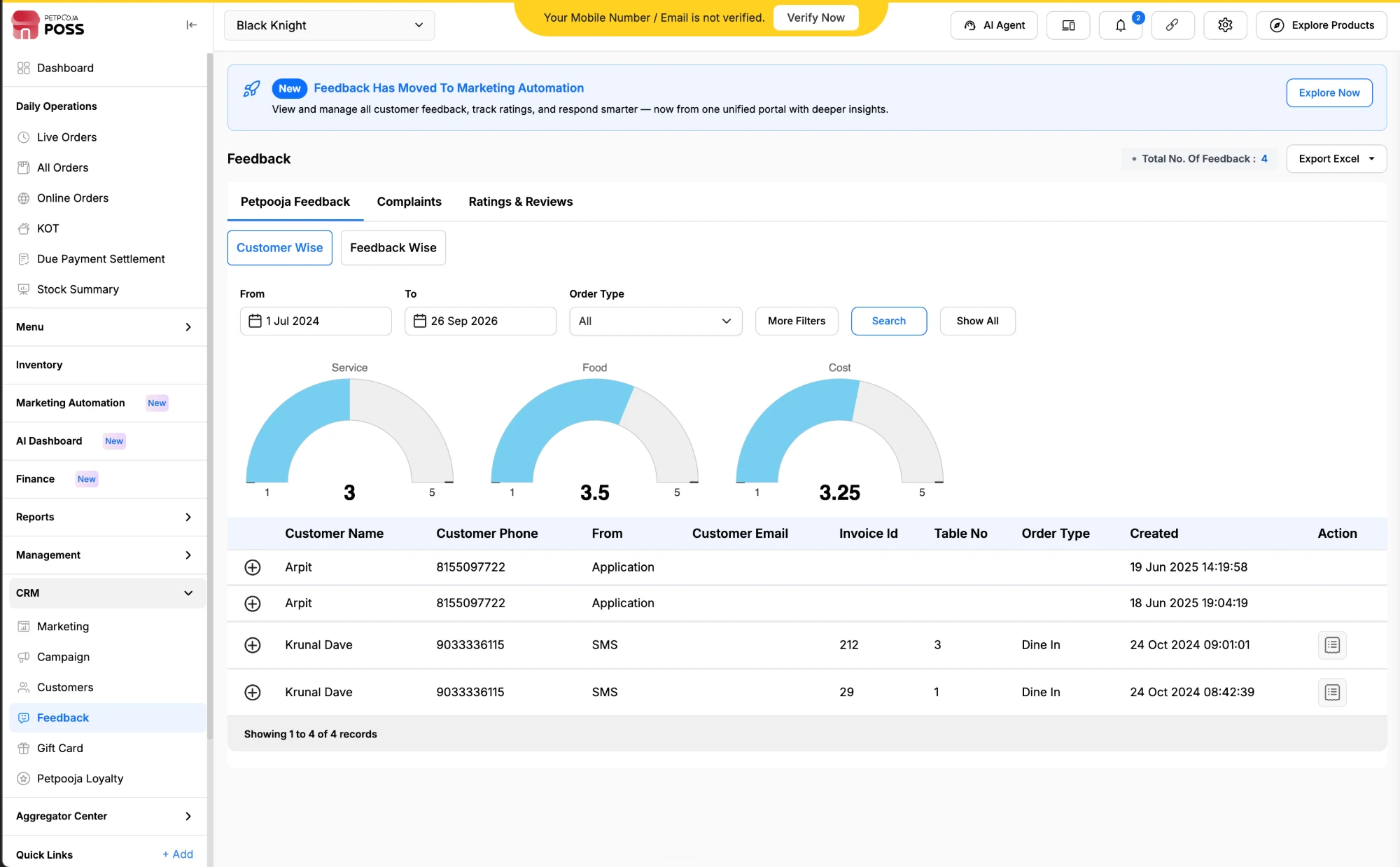
Feedback
"I can see a score, but not what the guest actually saw."
RFeedback
"For standalone feedback, there was no setup here at all."
SThe redesign
✓1. A dashboard that turns a rating into action
The old dashboard was read only. Owners set the form up in another app, came here to read scores, and had no way to act on a bad rating.
I brought the headline stats, weekly AI insights, alerts and one tap recovery onto a single Feedback screen inside Marketing Automation.
Owners scan for what needs attention now, so I led with the counts and negative feedback, then the AI trends, then Quick Actions, keeping the most urgent thing first.
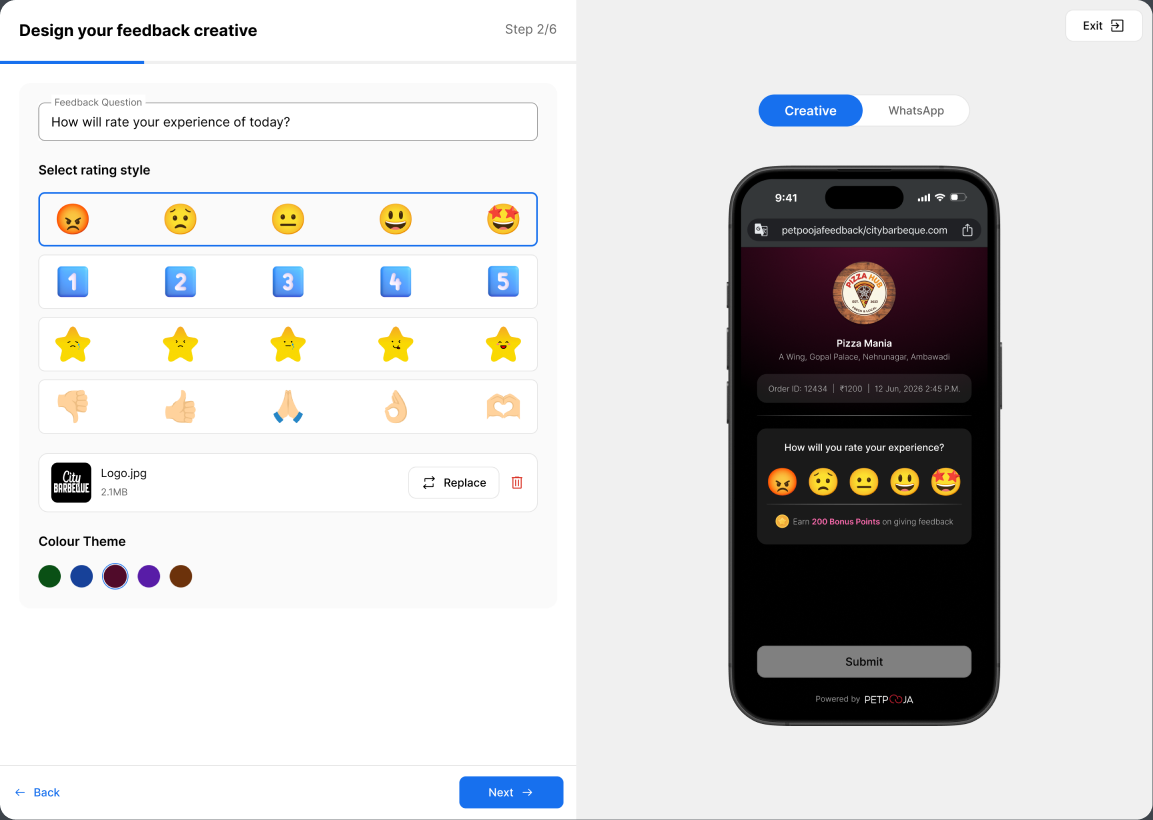
2. A guided setup with a live preview
Setting the form up meant leaving for another app, and owners could not tell what the guest would actually see on their bill.
I built a six step wizard with a live phone preview beside every step, so the owner designs the form by watching exactly what the guest gets.
The steps follow the order of decisions an owner makes: how to send, the creative, the questions, alerts, then reviews. Delivery comes first because it changes everything after it.
Impact after release
What changed once owners started collecting
How owners used it
weekly visits to the Feedback page, from 562 to 1,127 between July and September 2026
spent on the Feedback page per visit, so owners read what guests said
weekly e-bill messages, the channel the feedback ask rides on, from 19,129 to 35,271
The WhatsApp channel it rides on
message delivery rate across the account the feedback travels on
of delivered messages read, well above email and SMS
messages sent through the account, the reach the ask plugs into
What I would do differently next time
- 01
Ship the positive threshold control. It is hardcoded to four stars; the owner should decide what "unhappy" means for their restaurant.
- 02
Pressure test the standalone timing. Validate the thirty minute delay against real data on when guests actually answer.
- 03
Instrument the funnel from day one. Track bill sent to link opened to feedback submitted, so response rate is measured, not estimated.